


Some sights survive every expectation a photo sets up. The Blue Cave on Biševo is one of them. You step from a small wooden boat into a low chamber, your eyes adjust, and the water below you turns a shade of blue that looks lit from inside. People go quiet. Then someone whispers the obvious question that this guide answers in full: how is this even possible?
After years of running boats across this stretch of the Adriatic, we get that question more than any other. So here is the honest, useful version. No filters, no exaggeration, just what the cave actually is, why it glows, when it glows brightest, and what the visit feels like once you are inside.
What the Blue Cave actually is
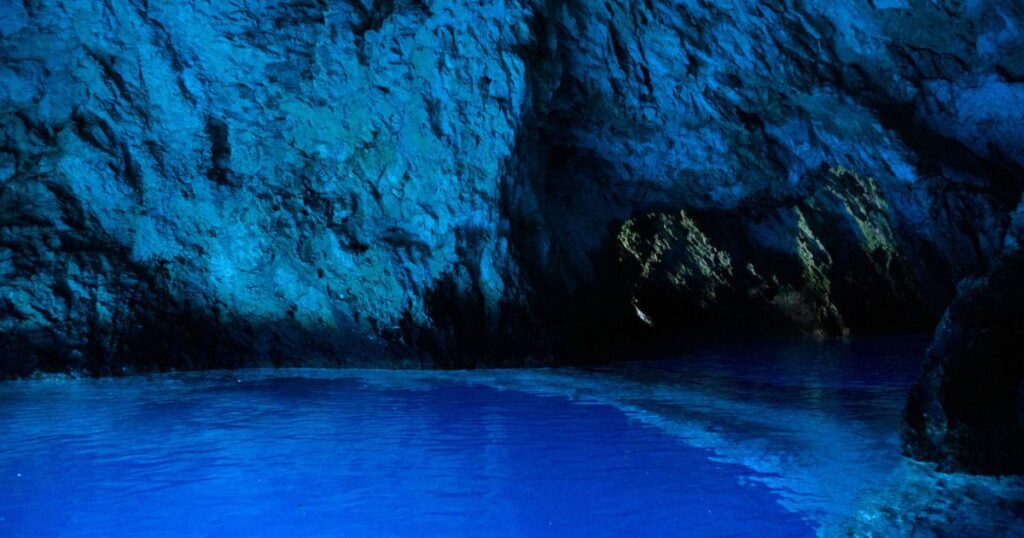
The Blue Cave, known in Croatian as Modra špilja, sits on the south east shore of Biševo, a small island just off Vis in the central Adriatic. It is a sea cave roughly twenty four metres long, with a ceiling that arches about fifteen metres above the water at its highest point. The visible entrance is small, low enough that the wooden boats slip in one at a time with passengers ducking their heads.
That modest entrance hides the cave’s real secret. Below the surface, on the seaward side, there is a second opening underwater. This submerged window is the engine behind the whole phenomenon, and it explains why the light behaves the way it does.
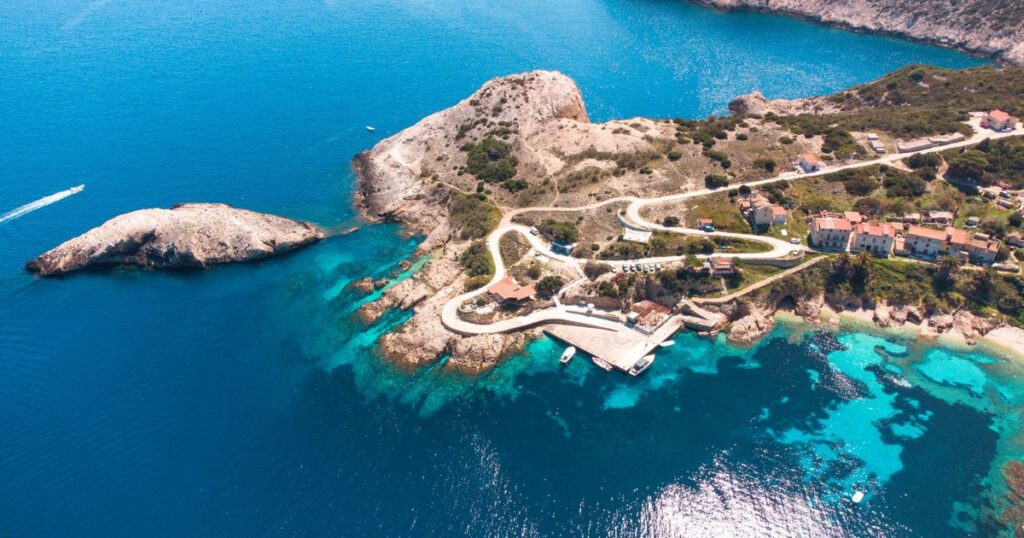
The cave is a protected natural monument in Croatia, which shapes how visits are managed. Access runs through the local concession on Biševo, entry happens in small boats, and there is a daily rhythm to the queue. Understanding that rhythm is half the battle of seeing the cave at its best.
Why the water turns silver blue
The colour is pure physics, and the explanation is satisfying once it clicks.
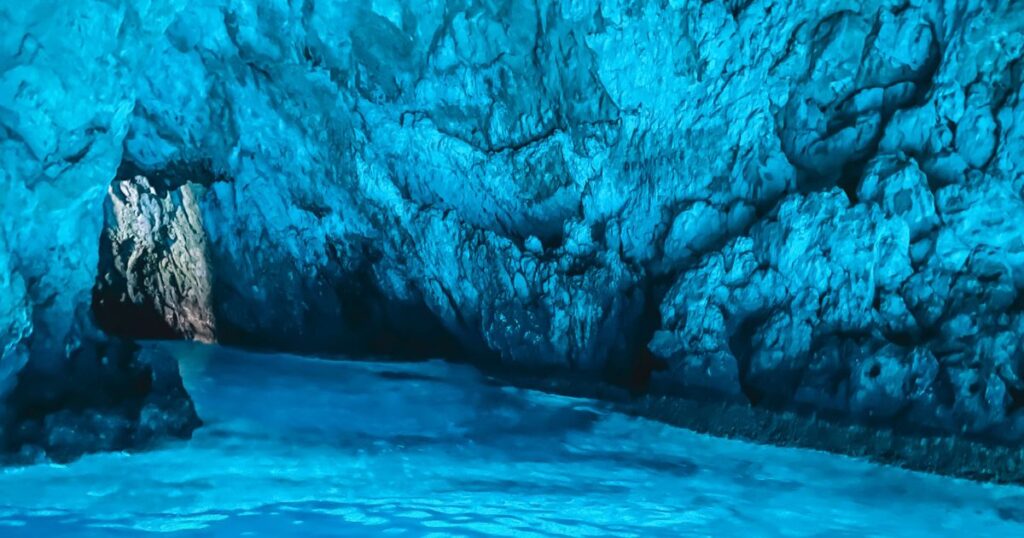
Sunlight hits the sea outside the cave and passes through that underwater opening. As it travels through seawater, the water absorbs the warm end of the spectrum first. Reds and oranges fade out within a few metres, while blue light keeps going. By the time the light reaches the inside of the cave, only the blue wavelengths are left.
That blue light then strikes the pale sea floor inside the chamber. The bottom is light coloured limestone and fine sediment, which reflects the blue upward like a mirror. The reflected light fills the cave from below rather than from above, so the water glows and the walls catch a silver sheen. Objects under the surface, even the hull of the boat, take on a soft silver outline.
This is the same effect that makes a swimming pool look blue, concentrated and amplified by a cave that lets light in through one route only. It happens in just a handful of sea caves worldwide, which is exactly why this one earns its place on so many Adriatic itineraries.
The hours that matter most
Here is the single most important thing to know before you plan anything. The glow is not constant. It depends entirely on where the sun sits in the sky.
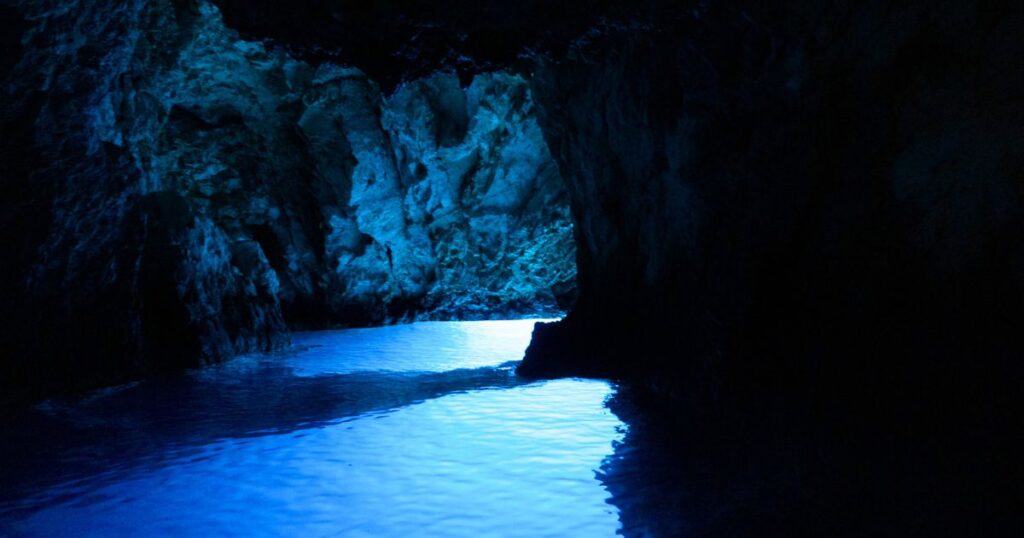
The Blue Cave is at its brightest roughly between 11:00 and 13:00, when the sun is high enough to drive light cleanly through the underwater opening. Earlier in the morning the angle is too low and the effect is muted. Later in the afternoon the light shifts and the blue loses its intensity. On an overcast day the cave still shows colour, but the drama softens, because the phenomenon lives and dies on direct sunlight.
This timing is why a relaxed late start almost never works for the Blue Cave. The boats that arrive inside that midday window see the cave the way the photographs promise. This is also the reason organised departures leave early, to cross the open water and reach Biševo before the peak queue forms during summer.
The best season to go
Croatia’s boating season for this route runs from April into November, and within that span the experience changes month to month.
June, September and early October tend to offer the best overall combination. The sea is warm enough for swimming, the weather is usually settled, and the stops around Vis feel calmer than at the height of summer. July and August bring the warmest water and the longest days, along with the biggest crowds, so a clear forecast and an early arrival matter even more in those months.
Two natural factors can close the cave on any given day regardless of season. Strong wind and swell make the low entrance unsafe, so the cave shuts when the sea picks up. This is normal and not a sign of bad planning. It is simply how a protected sea cave is managed responsibly, and it is worth keeping a flexible day in your schedule in case conditions move your visit.
What the visit actually feels like
The approach builds the moment well. You cross open water toward Biševo, the coastline of Vis falling away behind you, and you join a short line of small wooden boats near the entrance. When your turn comes, everyone sits low, the boatman times the gentle swell, and you glide through the narrow mouth into sudden shade.
Then the colour arrives. The chamber is quiet and cool, the water below you lights up, and for a few minutes you simply look. The full visit inside the cave is short by design, usually a matter of minutes, because the boats rotate through steadily to give every group the same experience. Swimming inside the cave itself is not permitted, which protects both the site and the flow of visitors.
What lingers is not the length of time but the strangeness of the light. Guests who have seen plenty of beautiful coves still describe the Blue Cave as the moment they remember most from a day on the Adriatic.
Practical tips before you go
A few small things make a real difference inside and around the cave.
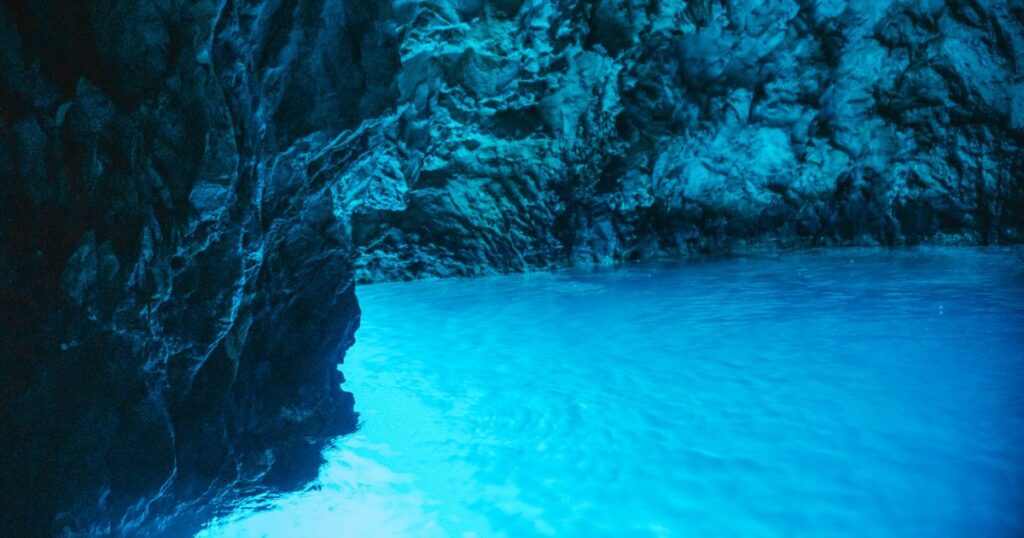
Bring a camera that handles low light well, since the chamber is dim apart from the glow. Most recent phones do a good job, and you rarely need to edit the colour afterward. The blue is already there.
Pack motion sickness tablets if you are sensitive, because the crossing to Biševo passes through open water that can get lively. Take them before you board rather than once you feel unwell.
Bring a light layer. The cave is noticeably cooler than the deck, and the early start can be fresh before the sun warms up.
Set expectations about access. The cave is entered in small boats run by the local concession, not on your own, and the brief visit is part of how a fragile protected site stays open to everyone. Patience in the queue is part of the day, especially in summer.
Keep the day flexible. Because wind can close the entrance, the most reliable plan is one that can shift the cave to a clearer window rather than forcing it on a rough morning.
Where the Blue Cave fits in a full day at sea
The Blue Cave rarely travels alone. Because Biševo sits near Vis, the cave pairs naturally with some of the most striking stops in this part of the Adriatic, from Stiniva bay framed by cliffs to the old fishing harbour of Komiža and the quieter lagoons nearby. Seen together across a single day, they turn one remarkable cave into a full coastal experience.
If you would rather have the timing, the official cave ticket and the open water crossing handled for you, our Blue Cave Croatia tour is built around reaching Biševo inside that midday glow, with departures from Split and Trogir between April and November. It is the simplest way to see the cave at its best and spend the rest of the day on the water around Vis.
However you choose to go, plan around the light, respect the conditions, and give yourself the midday window. The Blue Cave rewards travellers who arrive at the right hour with a sight that genuinely earns its reputation.
To avoid the hassle of coordinates, tickets, and timing, the easiest way to experience this natural wonder is by joining organized Split boat tours that handle all the logistics for you.